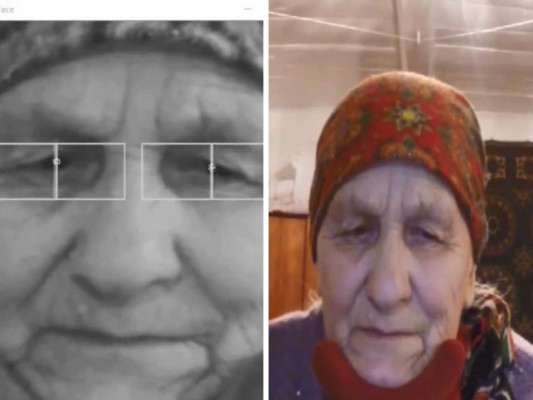
Through the evaluation of a person’s eye movements, this technology enables the detection ofcertain neurodegenerative diseases, such as Alzheimer’s and Parkinson’s.
“For the first time, it’s possible to interpret a person’s neurological state, without that person having to undergo long and difficult tests,” Laurent Itti, a researcher at the University of Southern California (USC), explained.
Dementia – a synonym for neurodegeneration in medical terminology – currently affects 50 million people worldwide.
Yet the rate of adequate care and follow-up for sufferers of these illnesses remains low, due to diagnostic failures. Eyemove is working to tackle this issue, thanks to its pain-free test which can be carried out in the home, and which enables the detection of neurodegenerative diseases at an early stage, slowing their development.
However, the young startup is facing a number of challenges in Russia, where the medical community is particularly conservative and tends to be hostile to new technology.
“In Russia,the medical world has put up barriers. If I don’t manage to break through the wall between now and June, I plan to leave and move abroad,” Yanchikovsaid.